How Many Words Is a 15 Minute Speech?
 James Holloway · June 7, 2026 · 8 min read

A 15-minute speech is 1,500–2,400 words depending on speaking pace. At a standard prepared-delivery rate of 130 words per minute, the target is 1,950 words. That is the standard working target for TEDx talks — long enough for a complete narrative arc with evidence, short enough that audience attention holds through the close. For a script this long, paste the full text into the speaking time calculator rather than estimating from a table.
Word count by speaking pace
| Pace | Words per minute | 15-minute word count | Pages (double-spaced) |
|---|---|---|---|
| Slow / deliberate | 100 wpm | ~1,500 words | ~3.75 pages |
| Average / prepared | 130 wpm | ~1,950 words | ~4.9 pages |
| Conversational | 150 wpm | ~2,250 words | ~5.6 pages |
| Fast / broadcaster | 160 wpm | ~2,400 words | ~6.0 pages |
Most speech coaches recommend scripting to 1,800–2,000 words for a 15-minute slot. The difference from 1,950 words leaves margin for audience applause, pauses for emphasis, and the natural slowdown that happens during emotionally charged passages.
Where 15-minute speeches appear
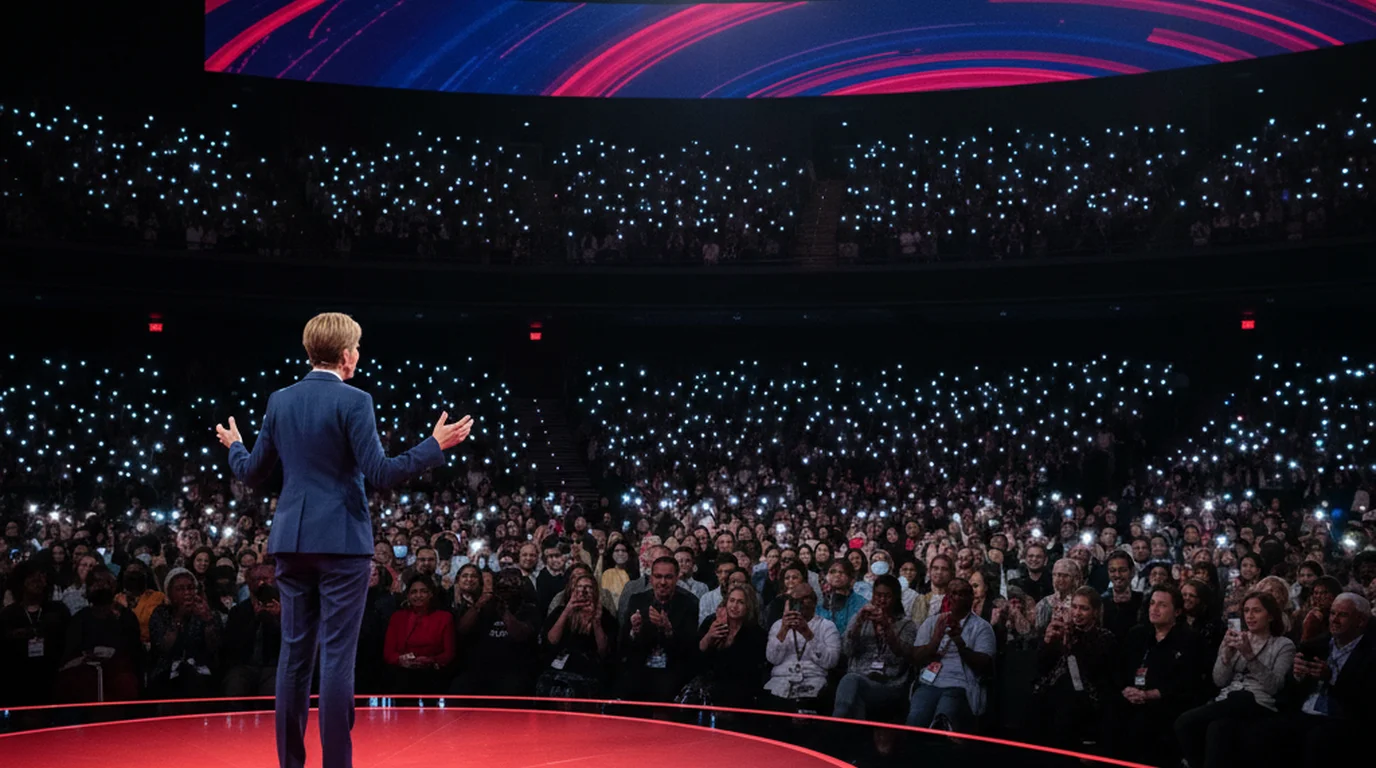
TEDx and TEDx-style talks. TED's official maximum is 18 minutes, and the platform specifically chose that limit after research showed sustained attention drops sharply beyond 20 minutes. Cognitive scientist John Medina's work on attention cycles, widely referenced in TED's own speaker prep materials, places the natural attention reset at approximately 10-minute intervals — which is why TED specifically caps talks at 18 minutes, a limit informed by research on sustained attention in adult learning environments. Most successful TEDx speakers target 14–16 minutes. At 130 wpm, 1,950 words fills 15 minutes. This is enough for a strong opening hook, three supporting examples, and a memorable close — the classic TED structure.
University lectures and modules. Many universities structure lectures in 15-minute segments separated by discussion or activity breaks. A 15-minute lecture module at 130 wpm is 1,950 words — long enough to introduce a concept, give worked examples, and set context for the activity that follows.
Extended keynote segments. Full keynotes are typically 30–60 minutes, but individual sections within a keynote often follow a 15-minute structure. If you are presenting as one of multiple speakers in a longer session, your 15-minute segment needs a clear open and close that works as a standalone piece.
Slide count for 15 minutes
12 to 15 slides is the practical upper limit for a 15-minute presentation. At 12 slides, each slide gets an average of 75 seconds — enough time to make a point and let it land. At 15 slides, you are averaging 60 seconds per slide, which works only if the slides are simple and visual rather than text-heavy.
A common structure: 1 title slide, 1 "why this matters" slide, 8–10 content slides, 1 summary slide, 1 call-to-action. Resist the temptation to fit more information by adding more slides — complexity in slides slows delivery and creates the risk of running over time.
Script discipline at 15 minutes
Fifteen minutes is the threshold where most speakers benefit from a full word-for-word script rather than bullet-point notes. At 5 minutes, you can improvise around an outline. At 15 minutes, improvisation creates uneven pacing, repeated phrases, and run-ons that eat your time budget.
Working with speakers preparing for TEDx stages, I've seen the same pattern reliably: speakers who script to exactly 1,950 words and rehearse with a timer consistently land at 14:30–15:15. Those who estimate without counting typically run over by 90 seconds.
Write the script, read it aloud, time it, and revise. Do this at least three times before your first rehearsal. If you are recording the speech or delivering it on stage, a teleprompter lets you read from the script without looking down. The free online teleprompter works in any browser for desk or studio delivery. For recording video of the talk on iPhone or iPad, the app's Camera mode overlays the scrolling script on your live camera view — keeping eye line natural and delivery confident.
Frequently Asked Questions
How many words is a 15 minute speech?
A 15-minute speech is approximately 1,500–2,400 words. At a standard prepared-delivery pace of 130 wpm, the target is 1,950 words. TEDx coaches typically recommend scripting 1,800–2,000 words to leave room for pauses and natural delivery variation.
How many pages is a 15 minute speech double spaced?
At 1,950 words, a 15-minute speech is approximately 7–8 pages of double-spaced 12pt text. Single-spaced at the same font size, it is about 4 pages. For teleprompter scripts, page count is not reliable as a planning target — larger fonts and line spacing significantly change the layout.
How many slides should a 15 minute presentation have?
12 to 15 slides is the practical range for a 15-minute presentation. A useful structure: 1 title, 1 context slide, 8–10 content slides (one idea each), 1 summary, 1 call-to-action or Q&A prompt. Going beyond 15 slides forces a pace that prevents the audience from processing each point before the next arrives.
Is 15 minutes enough for a TEDx talk?
Yes. TEDx talks allow up to 18 minutes, and 15 minutes is the sweet spot. At 130 wpm, 1,950 scripted words fills 15 minutes with room for pauses. The best-performing TED talks historically average 14–16 minutes. If your idea can be expressed completely in 12–13 minutes, do not pad it — a focused 12-minute talk lands better than a stretched 15-minute one.
How to practice timing your 15 minute speech
Knowing how many words is a 15 minute speech is only half the work — the other half is confirming that your actual delivery matches the script. Read the complete script aloud three times before your first rehearsal, stopping a timer at every section break. If section two consistently runs long, cut it before rehearsals ingrain the wrong pace. Your goal is to land between 14:30 and 15:30 on every run, not just the occasional perfect take.
Record yourself on the first full run-through. Listening back reveals filler words ("um," "basically," "you know") that inflate your real 15 minute speech word count without adding value, and pauses that feel natural in the room but eat thirty seconds of your time budget. Once you have a stable read time, use the Speech Word Count Calculator to verify your words per minute speaking rate and adjust the script length accordingly. If you come in at 140 wpm during practice, a 1,950-word script runs closer to 14 minutes — giving you space to breathe and pause without rushing.
Build a rehearsal log: date, total time, notes on which sections ran long. Three rehearsals with logged times is the minimum for a confident 15-minute delivery. Five is better for high-stakes settings like a TEDx talk or investor pitch. For context on how word count scales across different lengths, compare against a 5-minute speech to see how the buffer rules tighten as duration shrinks, or a 20-minute speech to see where a single narrative arc stops carrying an audience on its own.
Common pacing mistakes that break the 15-minute window
The most common reason a 15 minute speech runs long is not too many words — it is uneven pacing. Speakers slow down during familiar stories and speed up during data-heavy sections, which is the exact opposite of what audiences need. Data slides require slow, deliberate delivery so numbers land; narrative sections can move at a natural conversational pace. Knowing how many words is a 15 minute speech tells you the target, but understanding where to slow down and where to move is what keeps you inside the window.
A second mistake is not accounting for the live audience. In practice, you average 130 words per minute speaking rate. On stage, laughter, applause, or a dramatic pause can each take 10–15 seconds. Budget 90 seconds of buffer by scripting to 1,800 words rather than the full 1,950 words for a 15 minute speech. That cushion lets you honor the moment rather than panic about the clock.
Third: ad-libbing at the start. Opening remarks, acknowledgments, and "housekeeping" notes before the scripted intro can silently consume two to three minutes. Treat the opening minute as rigidly scripted as the rest. If you want to say something about the room or the occasion, write it into the script so it counts toward your word total and rehearsed time.
Using a teleprompter to lock in delivery pace
A teleprompter solves the single biggest pacing problem in a 15 minute speech: the temptation to rush. When you read from a scrolling script, the scroll speed sets the floor for your delivery rate. Set it to your rehearsed words per minute speaking rate — typically 120–130 wpm for a prepared presentation — and the script physically prevents you from racing through complex sections. You keep eye contact with the camera or audience while the words stay locked in the teleprompter view.
For video recording and virtual presentations, the script timer helps you dial in the exact scroll speed that matches your 1950 words speech target. If your 15 minute speech word count lands at 1,800 words after cuts, set the scroll to match a 13:50 read time and let the pauses fill the remaining margin naturally. For on-camera delivery, Teleprompter-Scrolling Scripts' Camera mode overlays the script directly on your live view, so your eyes stay on the lens — not your notes — for the full fifteen minutes.
Whether you are delivering a TEDx-style talk, a corporate keynote segment, or a recorded training module, locking pace through a teleprompter is the difference between hitting your time window consistently and relying on luck. Script discipline and tool discipline together give you the reliable, audience-focused delivery that a 15-minute format demands.
James HollowayJames Holloway coaches executives, founders, and professionals on scripted delivery and on-camera presence. His writing covers speech structure, words-per-minute pacing, and why most people's instincts about eye contact work against them.
Deliver Long Scripts With Less Cognitive Load
For 15-minute talks, a teleprompter keeps the script at eye level so you can focus on pacing, emphasis, and audience connection instead of memorization. Free on iPhone, iPad, Mac, and web.
Use Free Online Teleprompter Get the Free App