How Teleprompter Glass Works (And When You Don't Need It)
 Ryan Kowalski · June 7, 2026 · 7 min read
If you've ever wondered how news anchors hold perfect eye contact with the camera while reading thousands of words without notes, teleprompter glass is the answer. It's a simple optical trick that's been standard in broadcast for decades. Understanding how it works also helps you decide whether you need it — or whether a phone-based teleprompter app gets you the same result for free.
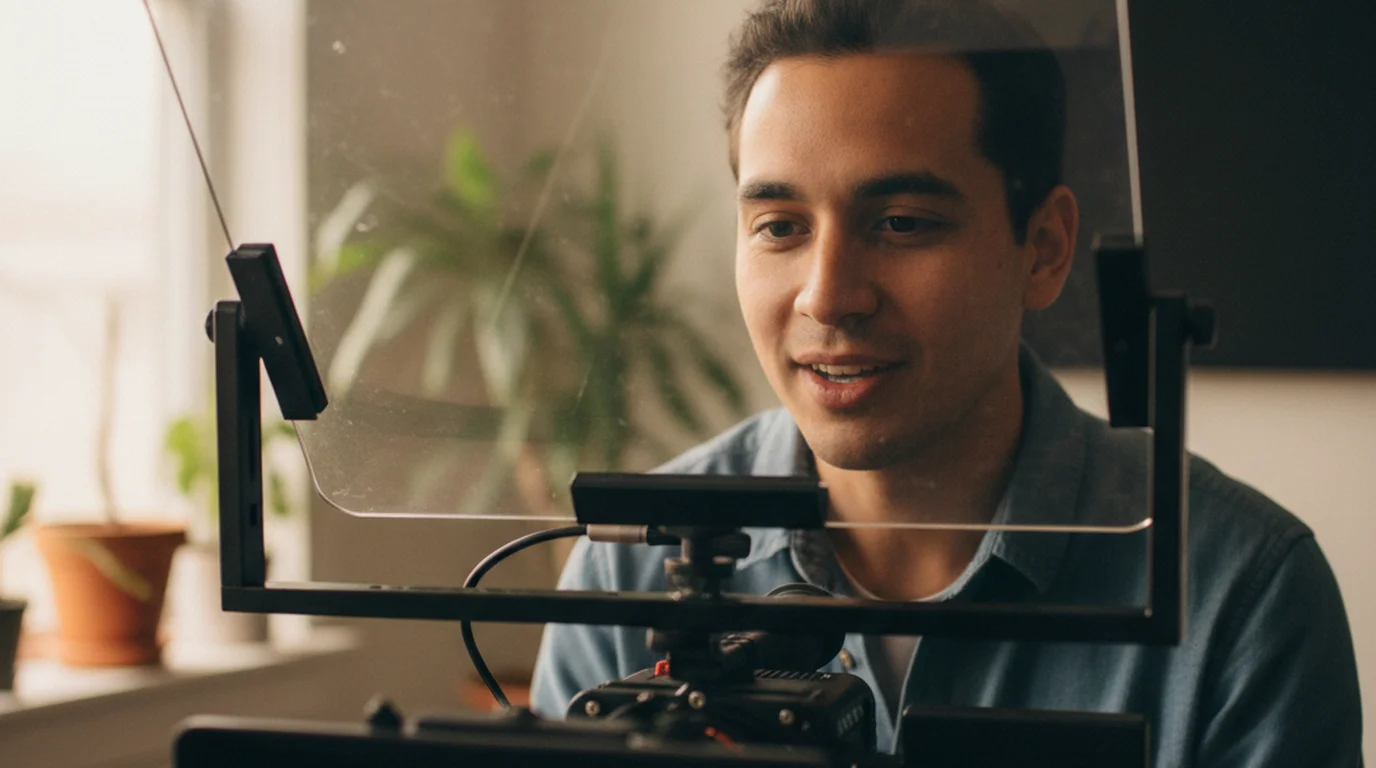
Teleprompter glass is a beam-splitter — a sheet of partially mirrored optical glass mounted at 45 degrees in front of a camera lens. A monitor positioned below it displays the scrolling script facing upward. The glass reflects the text toward the talent at eye level while remaining transparent to the camera behind it, so the presenter reads the script and looks directly into the lens at the same time.
What teleprompter glass is and how it's built
A broadcast teleprompter has three physical components: a monitor, a beam-splitter glass panel, and a shroud (the black hood that blocks ambient light). The monitor sits below the camera on a bracket, facing upward toward the glass. The glass itself mounts at a 45-degree angle in the optical path between the lens and the subject. A matte black hood surrounds the entire assembly to eliminate reflections from studio lights.
The glass is not a standard mirror. It's an optical beam-splitter with a partial metallic or dielectric coating — typically 30/70 or 40/60, meaning 30–40% of light is reflected and 60–70% passes through. This split is the key design constraint. The reflected text needs to be bright enough for the talent to read comfortably; the transmitted image needs to be clear enough for the camera to capture a sharp, unaffected picture of the subject.
Studio-grade teleprompter glass has an anti-reflective coating on the rear face to suppress secondary reflections from background light sources. Without it, strong studio lights create a faint ghost image that the camera picks up. Budget models use acrylic half-mirrors instead of optical glass — these work in controlled lighting but introduce visible distortion at wide apertures.
Professional teleprompter glass uses a 40/60 beam-splitter coating: 40% reflective toward the talent and 60% transmissive for the camera. This balance keeps the text legible under studio lighting while preserving image quality. Anti-reflective coatings on the rear face prevent ghost images at apertures wider than f/2.8.
How the reflected image stays invisible to the camera
This is the part people find counterintuitive. If the glass reflects the monitor, why doesn't the camera see the reflected text?
Two reasons. First, the camera is positioned directly behind the glass, aligned with the lens axis. From that angle, the glass is nearly transparent — the camera is not in the path of the reflected light. The reflected beam goes forward toward the talent; the transmitted beam goes backward through the lens.
Second, the monitor displays white text on a black background. The black background reflects very little light. Even if some reflected light reaches the camera's field of view from an oblique angle, the contrast ratio between the white text and the black background means the text appears as a near-invisible low-level haze rather than readable characters. In practice, a properly calibrated teleprompter glass setup is completely invisible in broadcast footage — you can verify this by watching any live news broadcast at normal viewing distance.
The talent, standing a few feet in front of the glass, sees the monitor's reflected image superimposed over the camera. From their position at that angle, the reflection is bright and legible against the darker background of the studio or location. The 45-degree mount angle is what makes both things true simultaneously.
Beam-splitter optics: the physics behind the glass
The partial mirror coating on teleprompter glass is the reason the whole system works. When light from the monitor strikes the coated surface, a fixed percentage is reflected and the remainder passes through. A 70/30 split reflects 30% toward the talent and transmits 70% to the camera. A 50/50 split reflects more, making the text brighter for the presenter but dimming the transmitted image slightly. Broadcast-grade glass typically uses a 60/40 ratio — 40% reflective, 60% transmissive — which is the standard balance for well-lit studio environments.
Why does this make the text appear bright to the presenter but invisible to the camera? It comes down to light direction and geometry. The monitor emits light upward. The glass, angled at 45 degrees, bounces that light forward toward the presenter's eyes. The camera, positioned directly behind the glass, only receives light that passes straight through — which is the scene in front of the talent, not the monitor image. The reflected beam and the transmitted beam physically travel in different directions and never compete at the camera sensor.
Monitor brightness is the control variable. The operator (or the presenter in a solo setup) adjusts the monitor brightness until the reflected text is comfortably readable without producing a visible glow in the camera image. Studio lighting helps here: the brighter the scene in front of the glass, the more the transmitted image dominates, and the less any stray reflection from the monitor matters. This is why a glass teleprompter that works perfectly in a lit studio can show a faint haze on the glass in a dark room — there is not enough competing scene light to wash out the monitor reflection.
The mirror-flip requirement
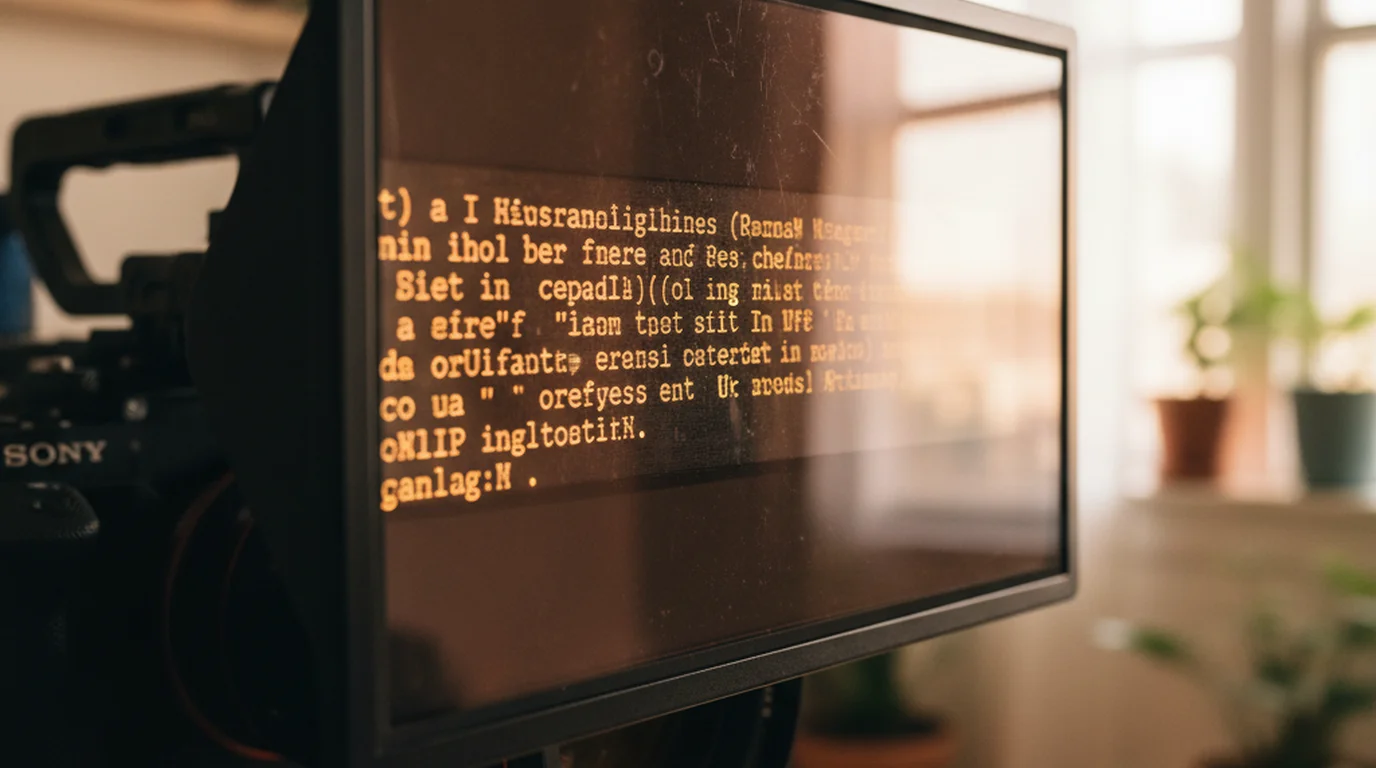
Reflection reverses text horizontally. If the monitor below the glass displayed normal left-to-right text, the presenter would see it reflected as a mirror image — every word running right to left, completely unreadable. To compensate, teleprompter software flips the script horizontally before sending it to the monitor. The monitor displays the text as a mirror image. When that mirrored text is reflected in the glass, it flips back to read correctly from the presenter's perspective.
This transformation happens automatically in any software built for glass teleprompter use. You load the script, switch to output mode, and the flip is applied before the image reaches the monitor. The presenter never sees the mirrored version — only the correctly oriented reflection on the glass.
Forgetting the flip is a surprisingly common setup mistake. If a presenter connects a standard display application or a slide deck to the monitor and looks at the glass, the text appears backward. Nothing else about the rig looks wrong — the glass is in place, the monitor is on, the hood is blocking light — but the text is unreadable. The fix is always the same: the software must apply a horizontal flip to the output before it reaches the monitor. This is one reason why using a dedicated teleprompter application, rather than a general text display tool, matters for glass-based setups. App-based teleprompters like Teleprompter-Scrolling Scripts avoid this issue entirely — there is no glass, no reflection, and no flip required.
Types of teleprompter glass setups
Camera-mounted (studio) teleprompter. The most common professional configuration. A bracket attaches to the camera's tripod plate or accessory shoe. The monitor hangs below the lens. The glass hood extends forward, about 12–20 inches in front of the lens. Talent stands 6–10 feet away. This is the standard setup for news desks, corporate video, talking-head interviews, and scripted online courses.
Floor-standing presidential teleprompter. Two glass panels on adjustable poles flank the speaker on either side, angled slightly inward. Each panel reflects a separate monitor positioned at floor level. The speaker alternates eye contact between the two panels, creating the impression of addressing both sides of the room simultaneously. This is the autocue setup used in political speeches and large-event keynotes. For presenters who need a stage reference tool without the full glass rig, a confidence monitor serves a related but distinct function.
Earpiece + no glass. For situations where physical equipment isn't possible — run-and-gun news reporting, ENG cameras in tight spaces, documentary interviews — the presenter uses an earpiece connected to a producer reading the script aloud. The talent repeats or paraphrases in real time. No glass, no monitor, but also no word-for-word scripted delivery.
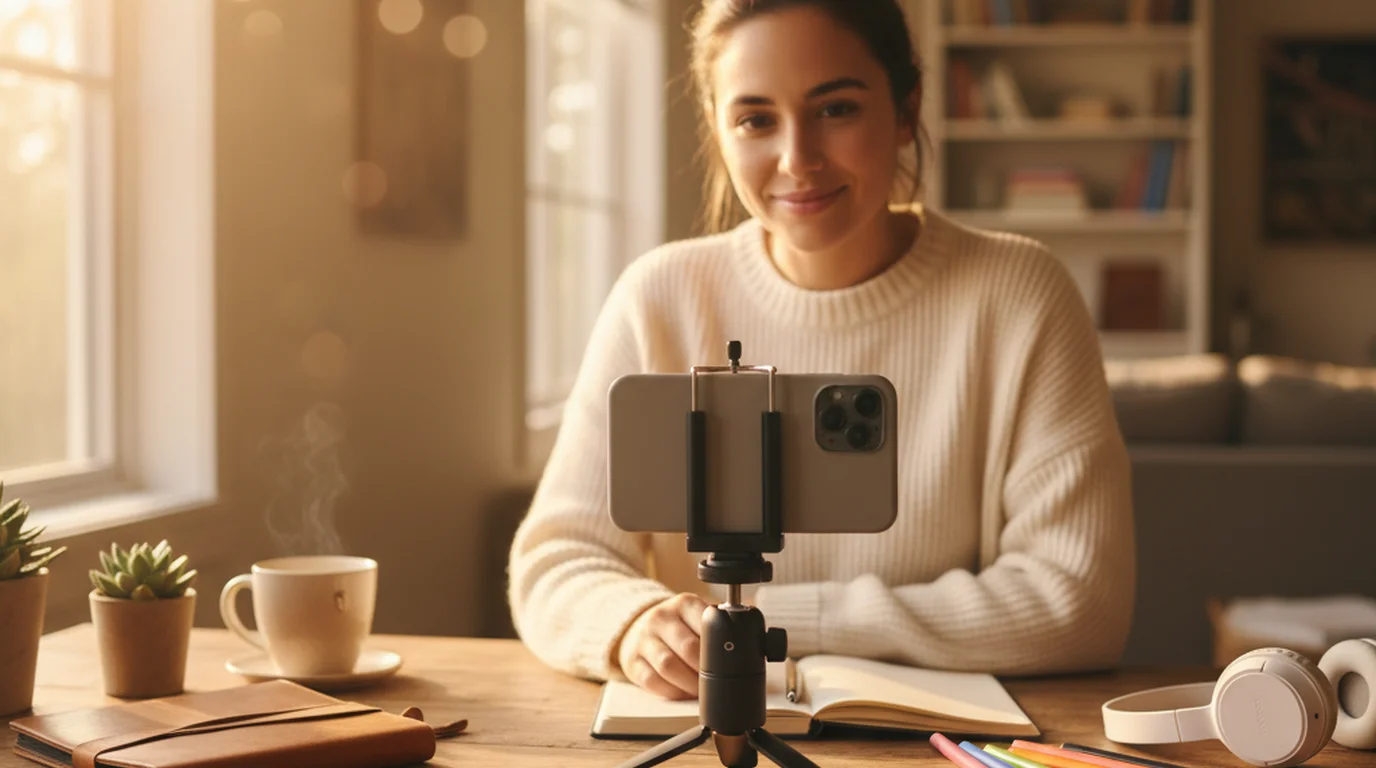
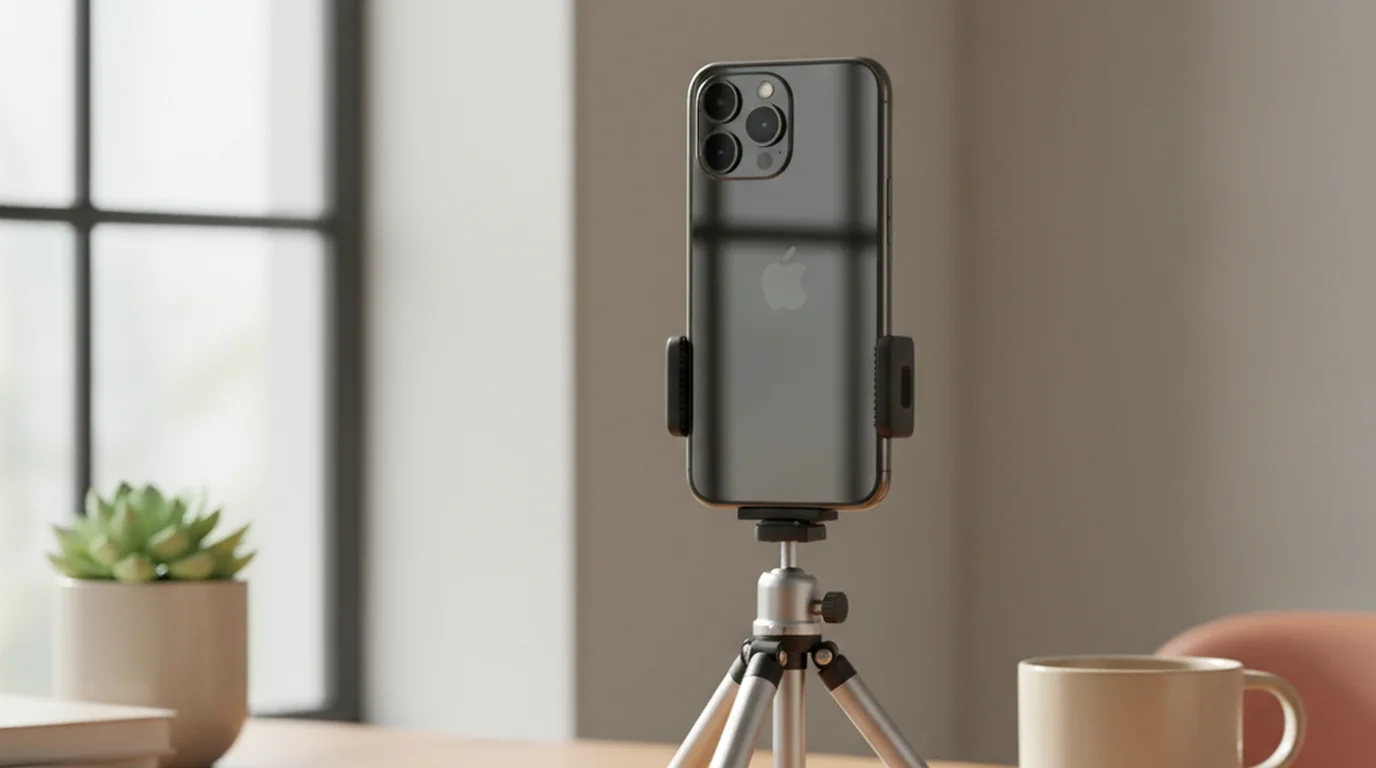
Phone or tablet app (no glass). For solo creators, a teleprompter app like Teleprompter-Scrolling Scripts on iPhone or iPad positions the scrolling text close to the camera lens on the device itself. The eye-line isn't perfectly lens-centered — the camera is at the top of the phone and the text scrolls across the screen below it — but the gap is small enough that viewers don't notice in standard talking-head video framing. For creators recording without a crew, this is the most practical option.
In 2025, the Elgato Prompter brought the beam-splitter teleprompter concept to desktop streaming setups for the first time as a consumer product, priced at $249. Before that, camera-mounted beam-splitter rigs started at $300 for basic configurations and exceeded $1,000 for broadcast-grade glass with an integrated monitor.
How a professional broadcast teleprompter setup works
In a broadcast environment — a news studio, a network talk show, a political address — the teleprompter rig is one part of a larger production workflow. The camera sits on a pedestal or tripod. The teleprompter hood attaches to the front of the camera, enclosing the glass panel and blocking ambient studio light from creating reflections. A small, high-brightness monitor sits inside the hood below the glass, facing upward toward the glass surface.
A dedicated prompter operator sits off-camera with a hardware controller — a scroll wheel or a variable-speed dial — connected to the software running the script. The operator's job is to match the scroll speed to the talent's actual delivery in real time. If the anchor pauses, the scroll stops. If they pick up pace, the operator speeds up. This human-controlled pacing is a significant reason why experienced broadcast delivery sounds natural rather than mechanical: the script follows the speaker, not the other way around. Operators also catch errors — if the anchor skips a line or ad-libs a phrase, the operator holds position so the talent can pick up the script again without losing their place.
In larger productions, the presenter also wears an IFB earpiece (Interruptible Foldback) — a one-way audio feed from the control room. The director can cue the talent to pick up pace, hold on a story, or prepare for a live handoff, all without the change being visible on camera. The teleprompter glass, the prompter operator, and the IFB earpiece form a coordinated system that lets a single anchor deliver hours of live scripted content with minimal errors and no visible prompting.
For a solo presenter using a glass rig without a crew, the operator role falls to the presenter themselves. They control scroll speed via a foot pedal, a Bluetooth remote, or a second device running the prompter software. This works, but it adds a cognitive layer — the presenter must simultaneously manage their delivery and their scroll speed, which takes practice to make feel natural.
Cost and complexity of glass teleprompter rigs
Entry-level camera-mounted rigs — glass, hood, mounting bracket, and a compatible monitor — start at around $150 for basic consumer options. These are usable for controlled indoor recording but typically use acrylic half-mirror panels rather than optical glass, and the included monitors are often low-brightness panels that require a dark room to produce a legible reflection. For a solo creator doing occasional video content in a home studio, a $150 rig is a workable starting point.
Mid-range rigs from established brands like Glide Gear, Ikan, and Padcaster run $400 to $800. These use optical glass rather than acrylic, include a higher-brightness monitor, and mount more securely to professional tripod heads. This tier covers most corporate video production, independent documentary work, and studio podcast setups where a glass rig is genuinely justified.
Broadcast-grade rigs — the equipment used at news networks, major political events, and film productions — start at $2,000 and go well above that. These use optical-grade beam-splitter glass with precision anti-reflective coatings, high-nit monitors calibrated for specific studio lighting conditions, and hardware controllers for the prompter operator. Presidential teleprompter systems for major events are typically rented from specialist production companies rather than purchased, and the day rate includes the equipment, setup, and a certified operator.
Beyond hardware cost, factor in setup time. Assembling and aligning a glass rig, calibrating the monitor brightness to match your lighting conditions, and getting the scroll software configured adds 15 to 30 minutes per session for anyone who does not set it up daily. For a production team running a daily broadcast, this is routine overhead. For a solo creator recording once a week, it is often the reason they look at a phone-based alternative and never go back to hardware.
When do you actually need the glass?
The glass teleprompter solves one specific problem: delivering a word-for-word script at speed while maintaining unbroken eye contact with the camera. That matters in broadcast news, where anchors read 150–180 words per minute continuously. It also matters in high-production corporate video where a speaker is delivering a fully scripted statement on camera.
For most content creators, the glass setup introduces more friction than it removes. A camera-mounted teleprompter rig weighs 3–8 lbs with a monitor attached. It requires a sturdy tripod. The monitor needs power. Setup takes 10–15 minutes per location. Most creators record once or twice a week from the same spot — they don't need to break down and rebuild a rig each session. If you're new to the technology, the complete guide to what a teleprompter is covers all the hardware and software options in one place.
A free iPhone teleprompter app handles the 90% use case: phone propped on a tripod or stand, script scrolling on screen, camera recording above the text. The eye-line to the lens is close enough that viewers read it as direct eye contact in standard YouTube or social media framing. We've tested this setup against dedicated glass rigs in identical recordings — at 1080p with a phone camera, viewers cannot identify which recording used glass and which used the app.
Where the glass rig wins: broadcast delivery at 160+ wpm, when a director is scrolling the script remotely and talent has no control over pacing, or when the exact camera-to-eye-line alignment is a production requirement rather than a preference. For desk-based YouTube or course recording, the free Mac teleprompter gives you the same camera-position precision without any hardware rig.
Frequently Asked Questions
What type of glass is used in a teleprompter?
Teleprompter glass is a beam-splitter with a partial mirror coating, typically 40% reflective and 60% transparent. The coating reflects the script from a monitor below while letting the camera see through clearly. Broadcast-grade versions are optical glass with anti-reflective coatings on the rear face. Budget versions use acrylic half-mirrors, which are cheaper but introduce distortion under strong side lighting.
How does teleprompter glass work?
A monitor sits below the camera facing upward. The beam-splitter glass mounts at a 45-degree angle in front of the lens. The glass reflects the monitor's image forward toward the talent, making the text appear to float at eye level in front of the lens. The camera, directly behind the glass, records through the transparent portion. Because the monitor shows white text on a black background, the camera's field of view picks up no visible reflection of the text.
What is the best glass for a teleprompter?
For studio and broadcast work, 40/60 or 30/70 optical glass with anti-reflective coating on the rear face is the professional standard. For DIY builds, acrylic half-mirror sheet works in controlled interior lighting. Avoid standard window glass or plastic — they are not coated for beam-splitting and produce too much ghosting. The Elgato Prompter uses its own glass optimized for desktop streaming distances.
Do they make teleprompter glasses?
Yes — wearable teleprompter glasses exist, using small display optics in the lens to show scrolling text in the wearer's line of sight. They're used in documentary interviews and situations where a mounted rig would appear in shot. They cost $200–$600 and require fitting for each user. For standard recording, most creators find a phone-based teleprompter app or the no-download online teleprompter faster and more flexible.
Ryan KowalskiRyan Kowalski reviews iOS and macOS apps for content creators, with a focus on teleprompter, camera, and productivity tools. His rule: use an app daily for at least two weeks before writing a word about it.
Read scripts naturally without the hardware
Teleprompter-Scrolling Scripts runs free on iPhone, iPad, and Mac. Camera mode scrolls your script with the recording — no glass, no rig, no setup time.
Use Free Online Teleprompter Get the Free App